
How to Check Stanly County Criminal History
A sound search begins with the question the record must answer. North Carolina eCourts Portal is useful for public case information. The courthouse terminal can search criminal cases across one county or the whole state at no charge. The Stanly clerk supplies paper files, copies, and a certified single-county name search. Current custody belongs to the sheriff's roster, while personal review of a fingerprint-supported state history goes through the SBI.
The Stanly County government page shows the county context behind these separate offices.
That county entry point helps identify the department, but it does not replace the clerk, sheriff, or SBI search tied to the actual record.
- Write down the full name, likely spelling variants, and any known case number, arrest date, or agency.
- Search Portal for the court case, then narrow the location to Stanly when a local result is needed.
- Use the sheriff roster only to answer a current-custody question.
- Match case number, filed charge, disposition, and dates before drawing a conclusion from a name.
- Ask the Stanly clerk for the paper file, a copy, or the certified county search when an official county result is needed.
Search Stanly Criminal Cases in eCourts
Stanly County joined Enterprise Justice, also called Odyssey, in October 2024. Portal now offers anonymous public access without a fee or account. Smart Search accepts a party name or case number, while advanced controls add location, filing date, case type, and case status. A wildcard search needs at least three letters of a last name followed by an asterisk and at least one first-name letter followed by an asterisk. A broad name match is only a lead. Confirm the case number and disposition.
The North Carolina courts hub for Stanly County connects local notices with the statewide system.
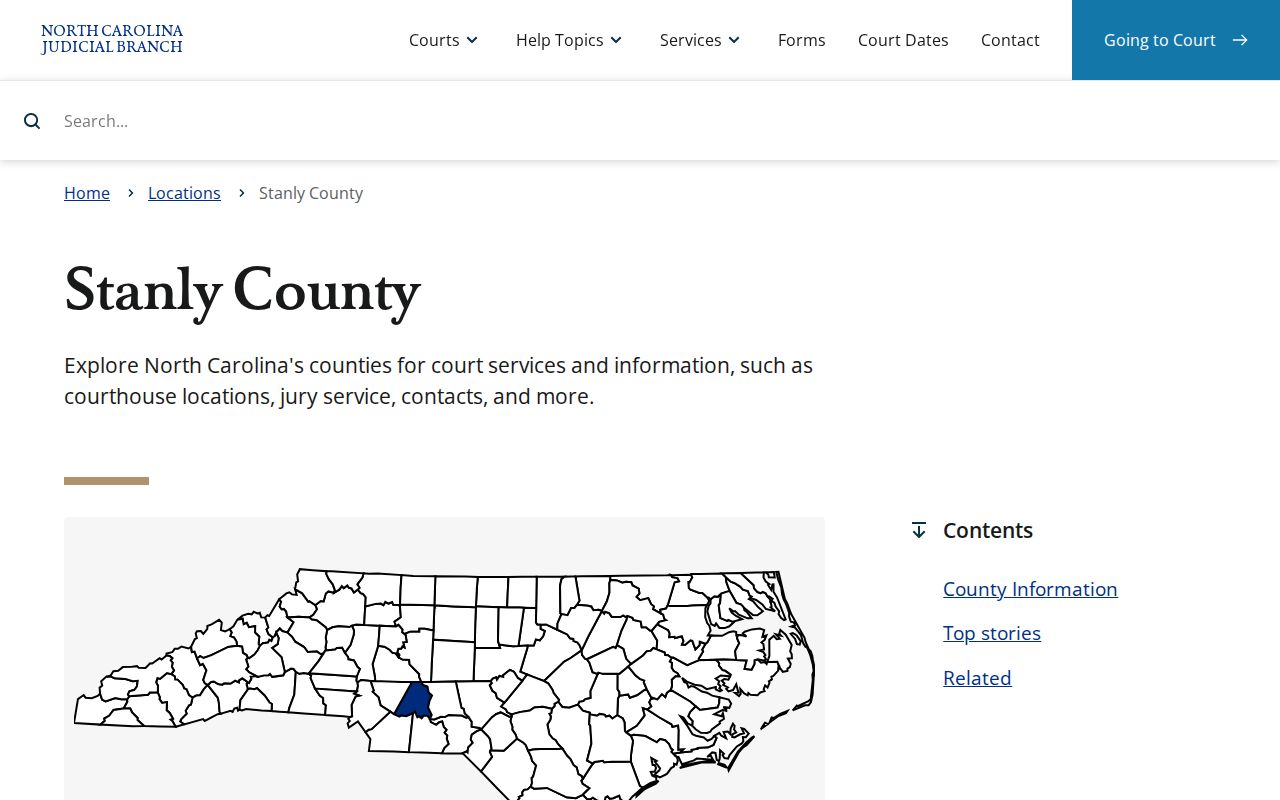
The hub is especially useful when a Portal result must be followed by a calendar, clerk contact, or paper-file request.
| Search control | Use | Key limit |
|---|---|---|
| Smart Search | Party name or case number | Name alone can match more than one person |
| Location | Select Stanly for local cases | A statewide search may return other counties |
| Filing date | Narrow a known time span | It is optional |
| Search Hearings | Find scheduled events | A hearing is not a final outcome |
| Judgment Search | Review public judgment results | Smart Search holds the fuller case summary |
Official North Carolina Background Checks
North Carolina does not open the SBI Computerized Criminal History file as a public name-search portal. The official self-review route is a Right to Review request based on a complete set of fingerprints taken by a local law-enforcement agency. It returns the requester's own North Carolina fingerprint-supported arrests and associated dispositions that the SBI received. It does not cover other states or provide the detail found in a full court case file.
A different product comes from the Stanly Clerk of Superior Court. Form AOC-CR-314 and a $25 fee produce a certified name search of criminal court records in Stanly County only. A public courthouse terminal can search county or statewide court records for free, but the result is not certified. The Judicial Branch directs formal county background-check requests to the clerk instead of treating Portal as the official product.
| Official channel | Scope | Published cost |
|---|---|---|
| SBI Right to Review | Requester's own fingerprint-supported North Carolina history | $14 per copy |
| Stanly clerk certified search | Criminal court name search in one county | $25 |
| Courthouse terminal | Noncertified county or statewide court search | Free to search |
| eCourts Portal | Public online case information | Free public access |
Review Your Own Stanly Criminal Record
For personal review, fingerprints solve a problem that name searches cannot. The SBI matches the submitted prints to its state file, which reduces the risk of confusing people with similar names. The request needs all ten fingerprints when physically possible, a completed form, and payment by money order or certified check. Cash, credit cards, and personal checks are not accepted for this product. Poor prints or an incomplete card can be returned.
The SBI Right to Review instructions show the official self-review route.
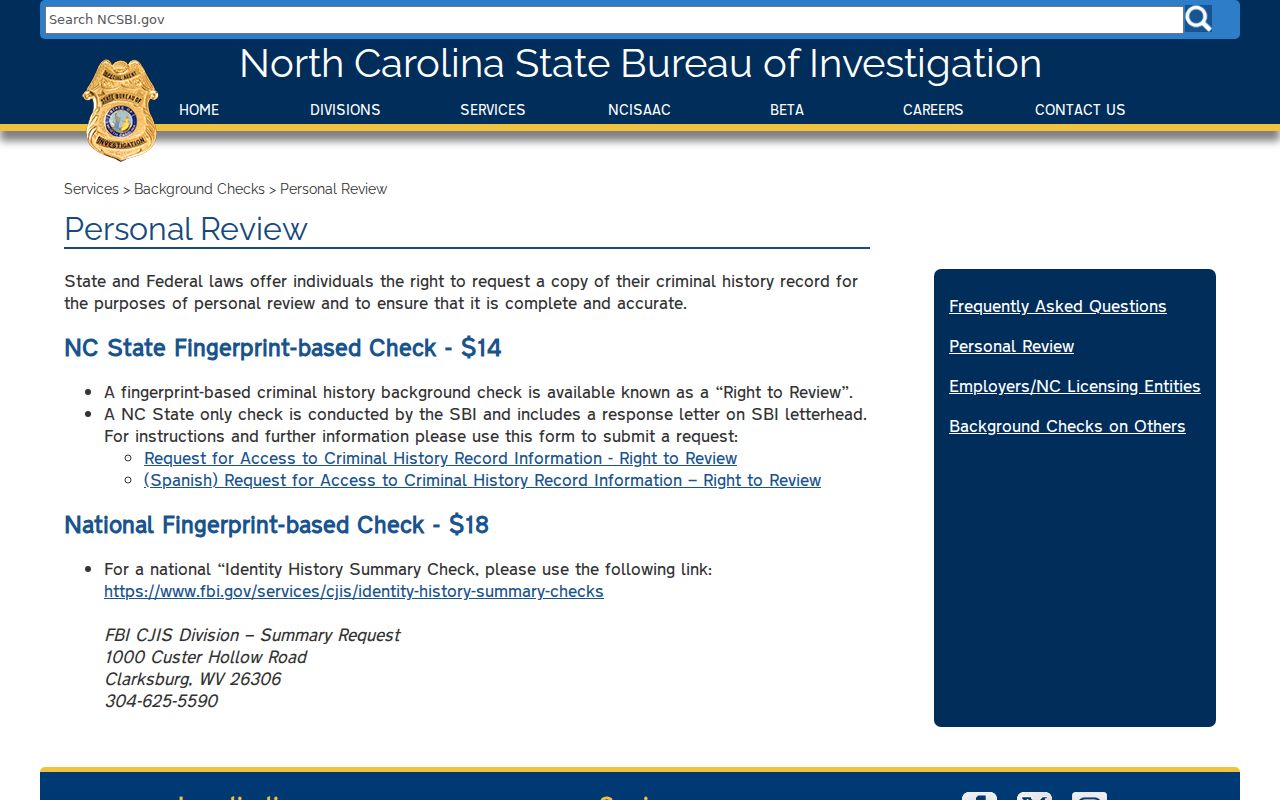
The result is the right starting point when a person believes a fingerprint-supported arrest cycle or disposition in the state file is missing or wrong.
If the response contains an error, the SBI says to complete review first and then send its written exception form to the NICS/CCH Unit Supervisor. The office that owns the source record matters. A clerk can address a court-file issue, but cannot directly rewrite SBI data. The SBI likewise cannot change the court's judgment.
Types of Criminal Records
“Criminal record” can mean several products. An investigating agency writes the incident or arrest report. Jail staff create the booking record. The clerk maintains the filed court case. SBI holds a fingerprint-supported state history, NCDAC maintains designated correctional and supervision data, and the county sheriff enters registration information into the state sex-offender registry. Those sources overlap, but none is a full substitute for all the others.
The Stanly County Sheriff's Office homepage displays several of the county's public record routes.
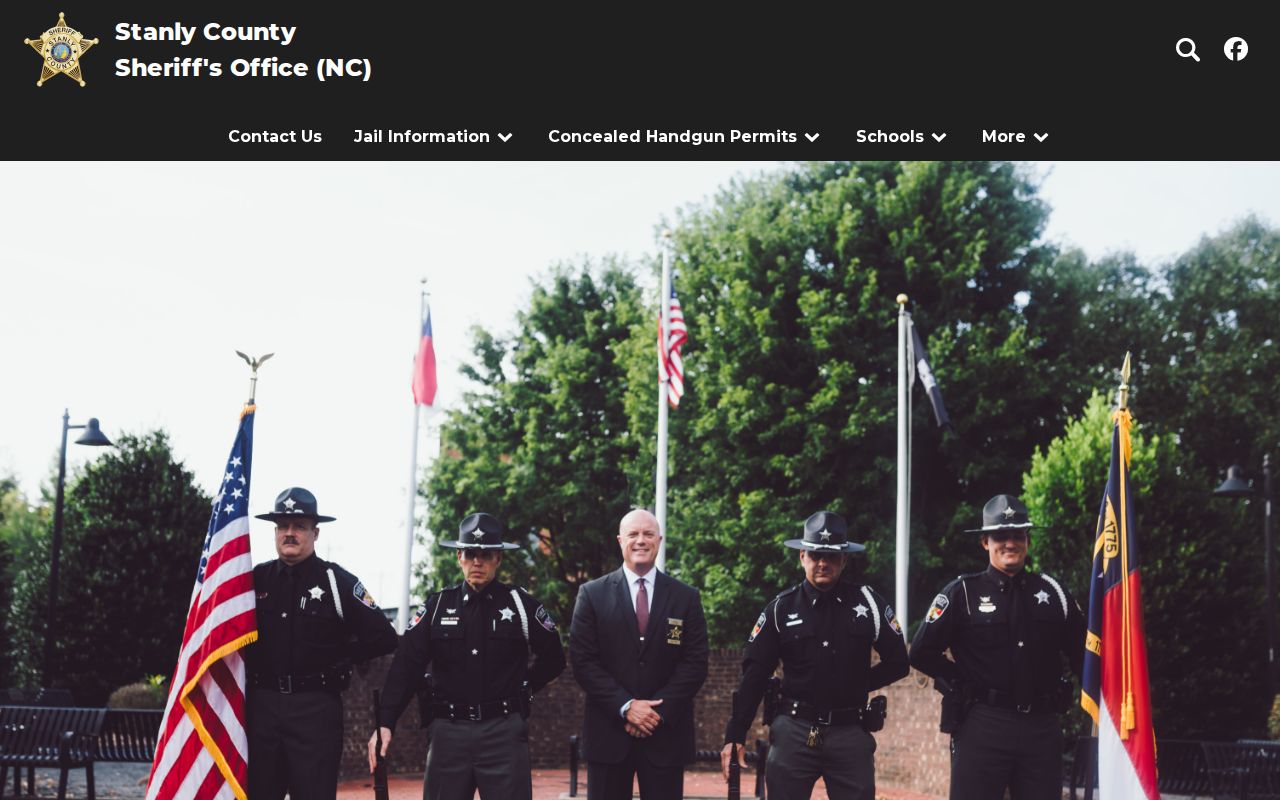
Its roster, Most Wanted page, sex-offender interface, and crash search each answer a narrow question rather than producing one broad criminal history.
- Incident and arrest reports: Request them from the sheriff, police department, or state agency that created them.
- Booking records: Use the Stanly jail channel for current intake, charges, bond, and custody status.
- Court files: Use Portal, a courthouse terminal, or the clerk for filed charges, events, judgments, and dispositions.
- Correctional records: Use NCDAC for state prison, release, probation, parole, and post-release information made public.
- Registry records: Use the official state or Stanly sheriff sex-offender interface for public registration fields.
Three Stanly Criminal Records Counters
Several key custodians sit close together in downtown Albemarle, but the short distance can hide a sharp records divide. The Clerk of Superior Court at 201 South Second Street holds District and Superior Court files. The sheriff at 223 South Second Street is the logical custodian for sheriff reports and detention records. Albemarle Police at 155 West South Street keeps its own city incident and arrest reports. A requester should choose by creator, not by which counter is closest.
The official Stanly County Courthouse page provides the court building and access details.
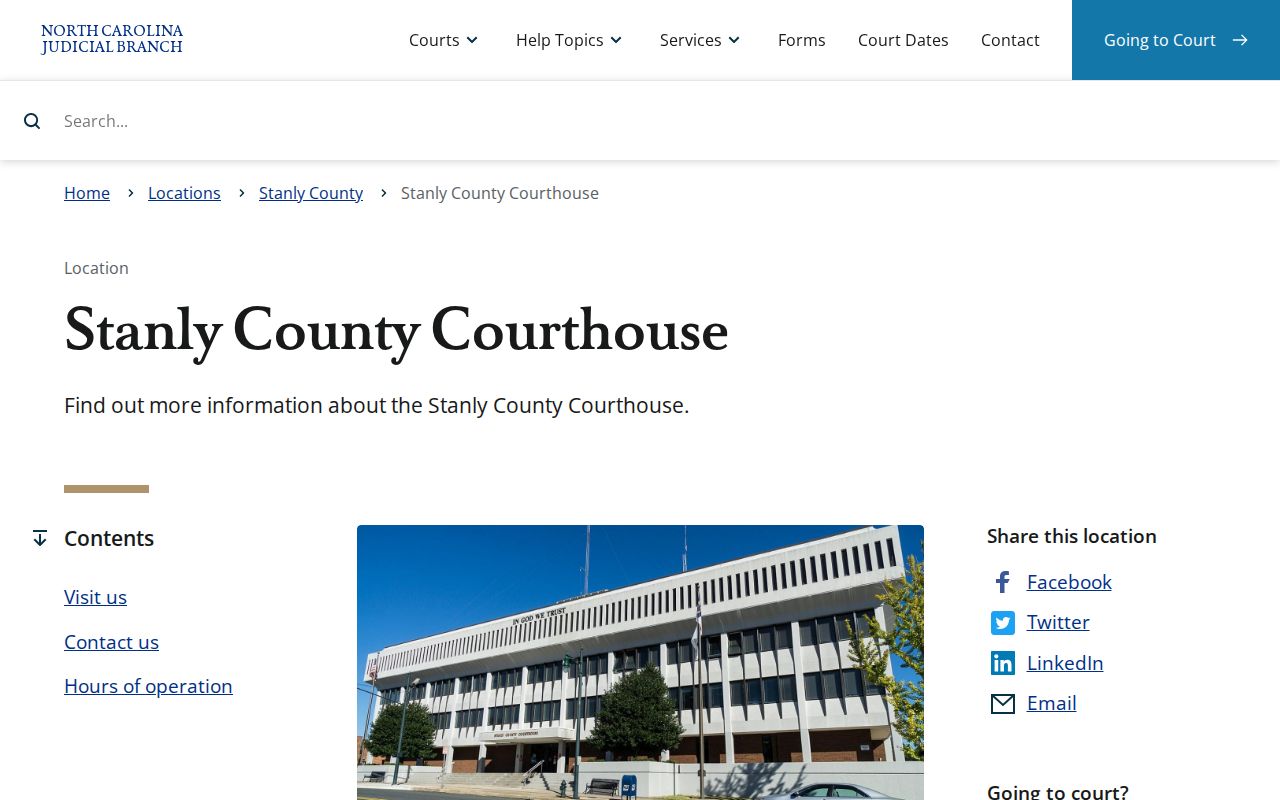
The courthouse image marks the correct destination for case files, certified searches, and filed dispositions, not for an agency's investigative report.
Clerk of Superior Court
201 S. Second St.
Albemarle, NC 28002
704-986-7000
Weekdays, 8:30 a.m.-5 p.m.
Sheriff's Office
223 S. Second St.
Albemarle, NC 28001
704-986-3714
Call to confirm record-request method and cost.
Albemarle Police
155 W. South St.
Albemarle, NC 28001
704-984-9500
Records counter open 24 hours.
What a Stanly County Criminal Record Shows
The fields depend on the source. A jail record can show booked date, inmate ID, description, custody details, and charges. A court summary may add the case number, parties other than victims, assignment, events, hearings, financial information, disposition, and judgment. An SBI response focuses on fingerprint-supported arrest cycles and dispositions reported to the repository. Treat a field as evidence of only what it states.
| Name and identifiers | Names and descriptors used to distinguish the subject, with fingerprints providing the strongest state match. |
|---|---|
| Arrest and booking data | Arresting agency, booked date, intake identifiers, alleged charges, bond, and current custody fields where public. |
| Charges and statutes | Booking charges may differ from charges later filed or amended in court. |
| Disposition | Dismissal, acquittal, conviction, or another reported outcome in the court or state record. |
| Sentence | The judgment may state active custody, probation, or another lawful sentence. |
| Custody or supervision | County jail status comes from the sheriff; state custody and supervision come from NCDAC. |
Note: A matching name is a search lead, not enough proof that a record belongs to the intended person.
When Stanly Jail Records Disappear
The sheriff inmate list covers people currently shown in county custody. It is not a historical arrest database. When a name leaves that list, the person may have been released, transferred, or sentenced into another system. Call Booking at 704-986-3739 or the booking-and-bond desk at 704-986-3858 for present local custody. For an older sheriff record, call the main office and ask how to request the exact booking or report.
The North Carolina Offender Public Information search is the state correctional fallback.
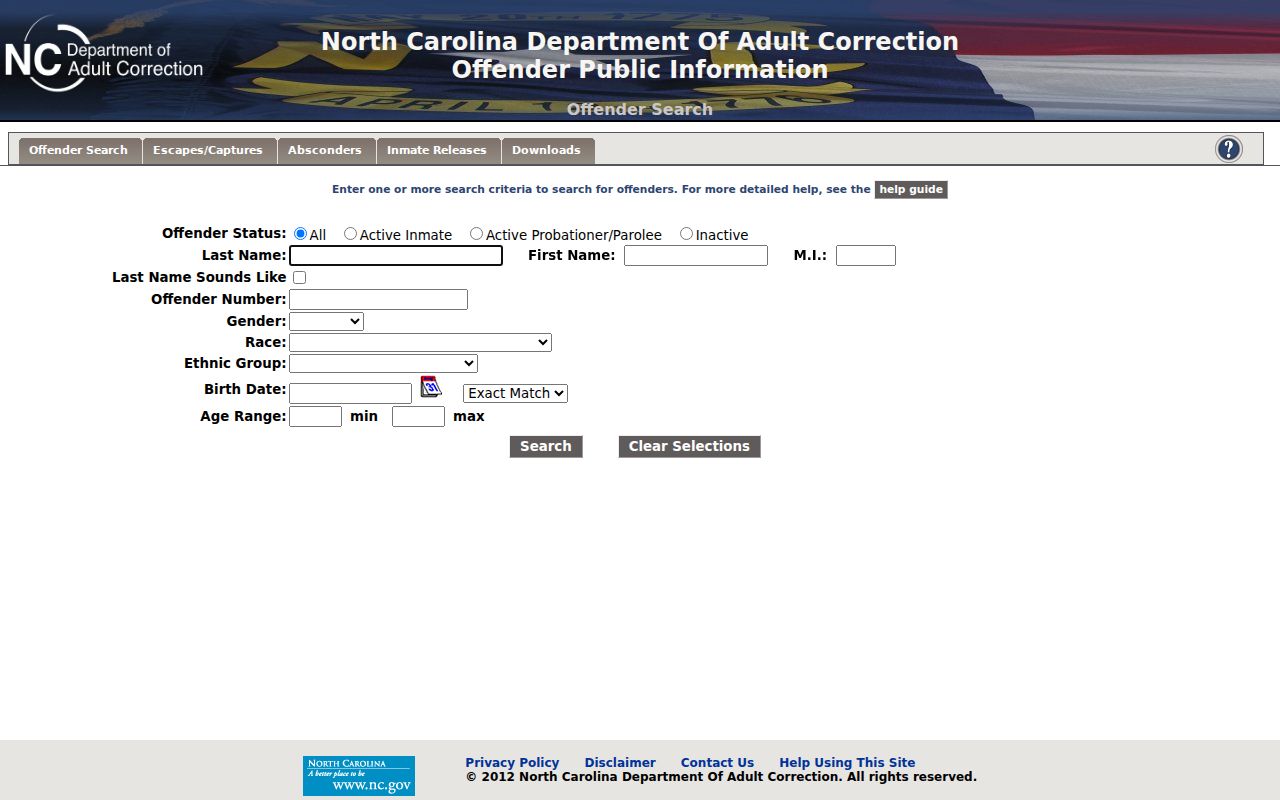
That locator is appropriate for state custody or supervision, while the court judgment remains the best source for the sentence itself.
County probation is not a separate local department. Adult probation and post-release supervision are handled through NCDAC Community Supervision. Parole decisions and supervision involve the North Carolina Post-Release Supervision and Parole Commission and NCDAC. Juvenile supervision records remain confidential and are not part of these adult public searches.
Public Access Laws
North Carolina Public Records Law, Chapter 132, supplies a broad access framework, but it works beside laws that protect investigation material, law-enforcement recordings, juvenile files, expunged matters, and other confidential data. Inspection of public records carries no charge. Copy costs and a reasonable special-service charge may apply when a request needs extensive staff or technology resources. An office need not create a record that does not exist.
The official Stanly sheriff crash-report search illustrates a record-specific access channel.
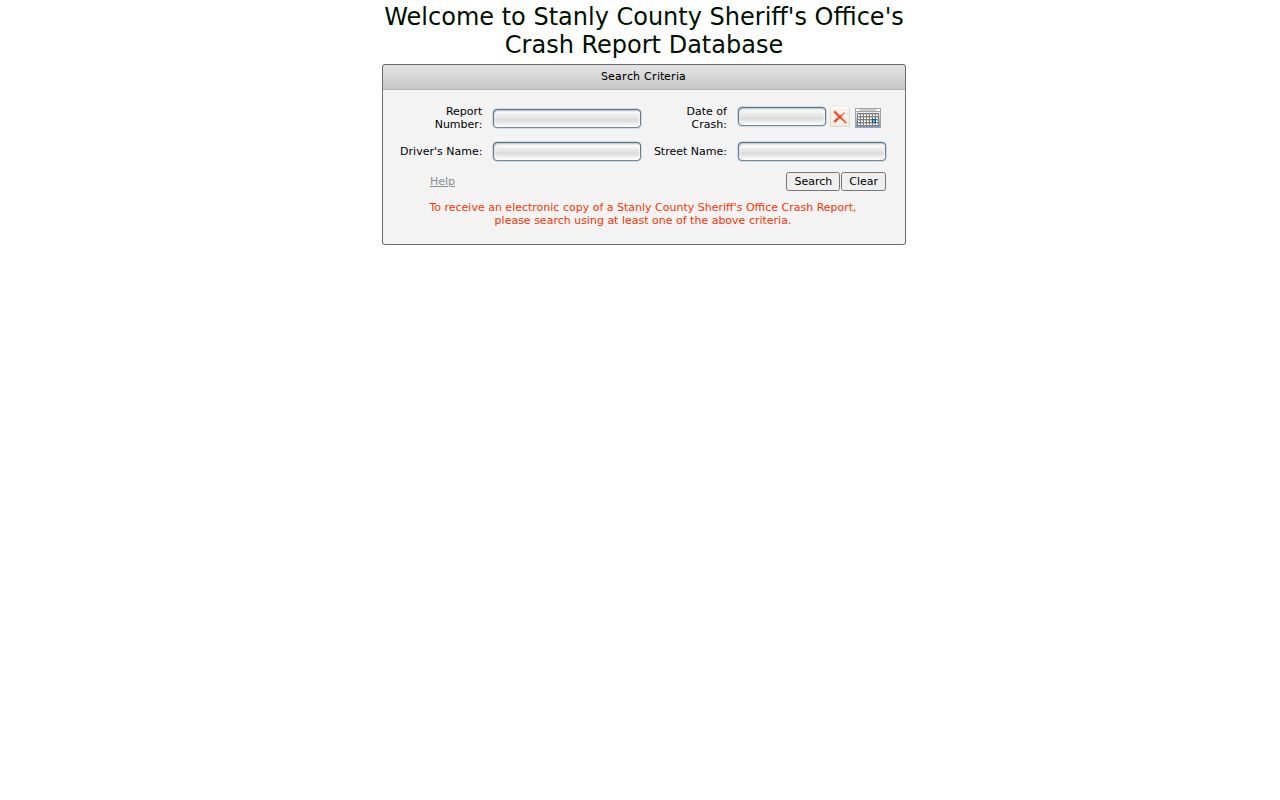
Its report number, crash date, driver's name, and street fields apply to sheriff crash reports, not criminal case files or a countywide arrest search.
Key North Carolina laws:
Chapter 132 sets the general public-record framework and allows lawful redaction.
G.S. 132-1.4 separates public incident and arrest facts from protected criminal investigation information.
G.S. 132-1.4A creates special rules for disclosure and release of law-enforcement recordings.
Chapter 15A expunction provisions preserve limited confidential files and govern some later access.
Stanly Criminal Warrant Fallback Chain
No complete official name-searchable active-warrant database was found for Stanly County. The sheriff's Most Wanted page is selective. Absence there does not prove that no warrant or order for arrest exists. For a concern about your own status, call the sheriff at 704-986-3714, the magistrates at 704-986-7019, and the clerk at 704-986-7000. Search the underlying court case and obtain exact surrender and bond instructions before appearing.
The Stanly sheriff Most Wanted interface shows the limited public tool.
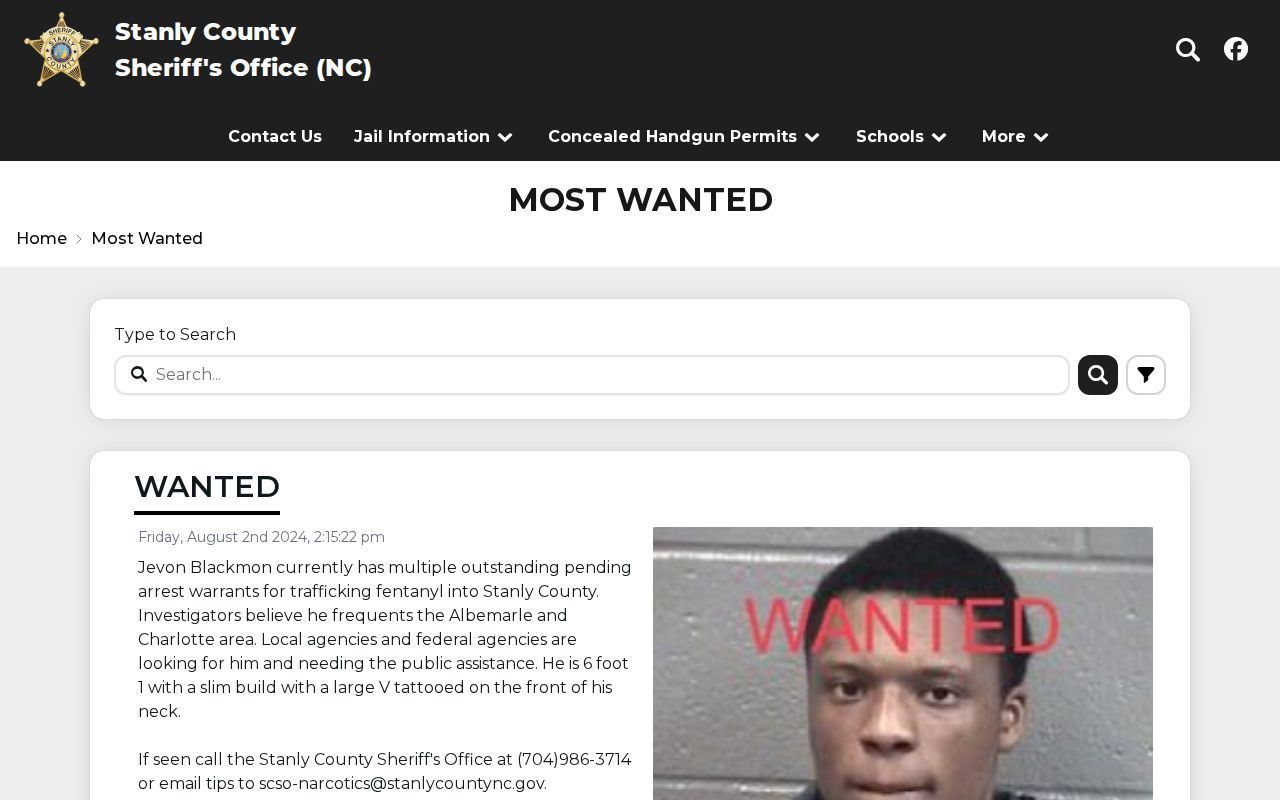
The free-text list provides a tip route, but it does not consistently show the case number, warrant number, issue date, bond, or service status needed for clearance.
- Arrest warrant
- A judicial command to arrest based on an accusation.
- Order for arrest
- A North Carolina process that can follow a case event such as failure to appear.
- Search warrant
- Authority to search a place or item, often not public while active.
- Disposition
- The court's recorded outcome, which is distinct from the warrant or arrest itself.
Sealed, Expunged & Restricted
Sealed, confidential, juvenile, and expunged records do not become public because a search tool exists. North Carolina juvenile records are confidential and generally require statutory authority, a court order, or a proper search warrant for release. Unreturned criminal warrants are also restricted in Portal. A section that has no public data may simply be absent from the online case summary.
Expunction is North Carolina's legal process for removing a qualifying charge or conviction and sealing or destroying state records covered by the order. Eligibility depends on the statute, offense, age, result, and prior record. Some dismissed charges and findings of not guilty follow different rules from convictions. A petition belongs in the county where the charge or conviction arose, which means the Stanly clerk only handles a Stanly-origin case.
Note: A missing online result may reflect restriction, migration, or a data gap rather than proof that no record ever existed.
Stanly Criminal Record Expunction Steps
The Judicial Branch maintains an eligibility matrix and forms for North Carolina expunction. Some routes need affidavits, criminal-record checks, or a hearing. Local steps can affect how a judge's signature or hearing is obtained, so the Stanly clerk is the practical place to confirm procedure after selecting the correct statutory form. Do not assume that every charge within one case qualifies in the same way.
The North Carolina expunction guidance lays out the official forms and categories.
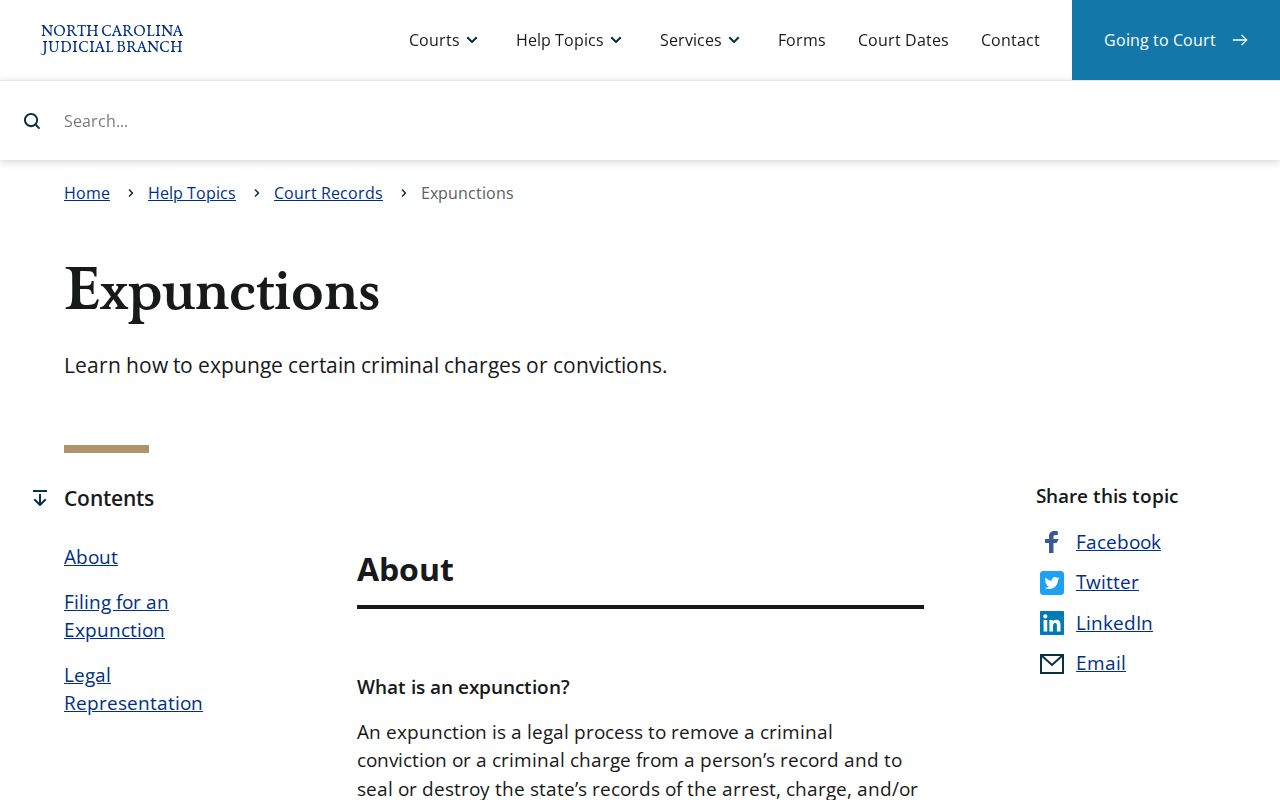
The official matrix is the right starting point, while the clerk can address how a Stanly County petition moves through the local court file.
Keep the signed order supplied after relief. The Judicial Branch warns that a later replacement may not be available because the clerk and notified agencies destroy criminal-process files, including the order. A private publisher's copy does not vanish automatically. If state court-system information remains several weeks later, contact the clerk that granted relief. A separate SBI correction may be needed if the fingerprint-supported state history is inaccurate.
Criminal Records by City in Stanly County
Albemarle, Locust, and Norwood are Stanly County's three largest incorporated cities by the official 2024 estimates. Their police departments create local incident and arrest reports, but North Carolina has no municipal criminal courts. City charges flow into the unified District and Superior Court system. Locust also crosses into Cabarrus County, so a city name alone cannot establish which county jail and clerk hold the later records.
Albemarle Criminal History
17,344 residents · APD has a 24-hour records counter, while court files remain with the Stanly clerk.
Locust Criminal History
5,992 residents · Confirm whether a record arose on the Stanly or Cabarrus side.
Norwood Criminal History
2,520 residents · Police reports use direct request channels, not an online blotter.
Stanly Criminal Records Changed in 2024
Stanly County entered eCourts on October 14, 2024. The change replaced legacy court systems with Odyssey case management, electronic filing, and public Portal search. It did not eliminate the clerk counter, courthouse terminals, or paper files. Those channels remain important for certified searches, older material, copies, and help when online fields do not settle the identity or outcome.
The Judicial Branch criminal-record search instructions distinguish the $25 clerk check from free terminal access.
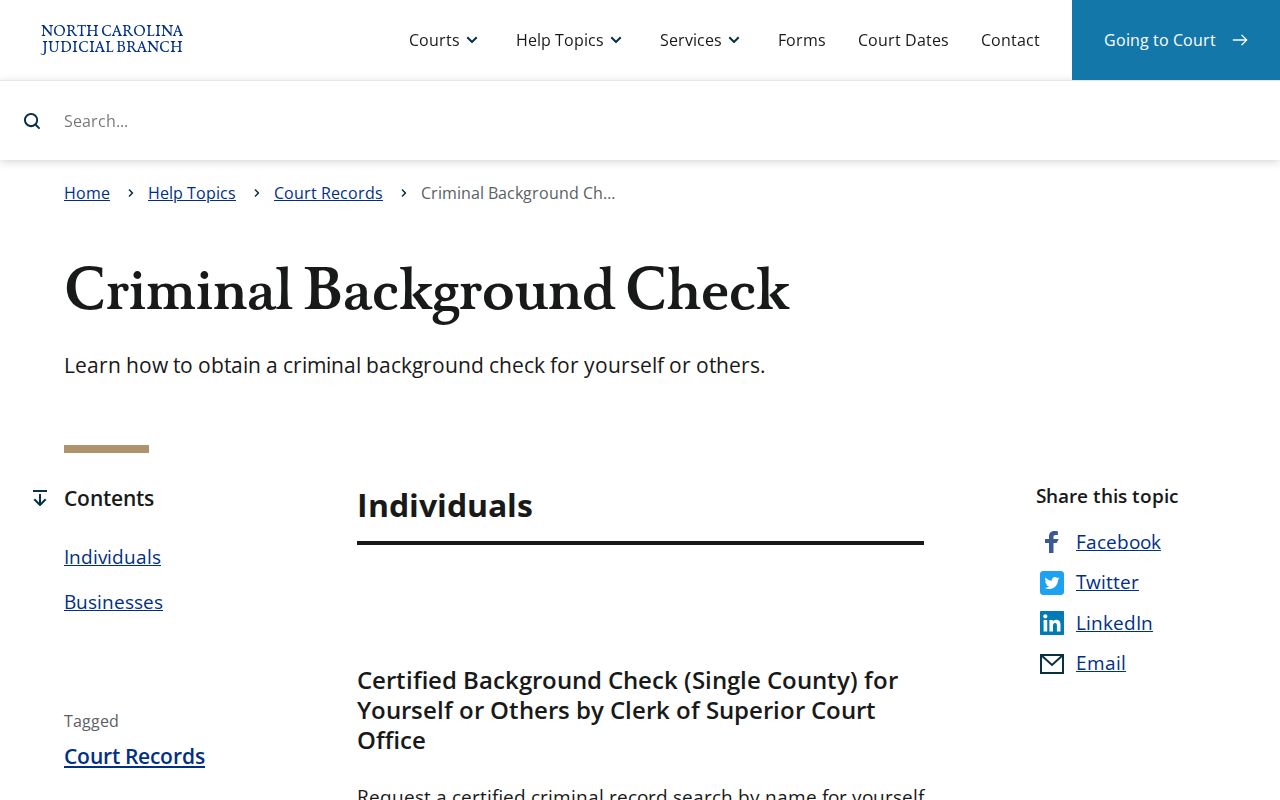
That distinction matters after modernization: quick online access is useful, but the certified Stanly County product still comes from the clerk.
A separate recent change affects detention communication rather than public case search. Beginning January 20, 2026, ordinary inmate mail moved to a scanning address with page and photo limits. This did not alter court records or turn jail correspondence into a public criminal file. It is one more example of why researchers must identify the office and record type before relying on a new system notice.